Optimizing Bike Design
Building a data collection system to refine bike architecture
Expanding Access to Reliable Transportation
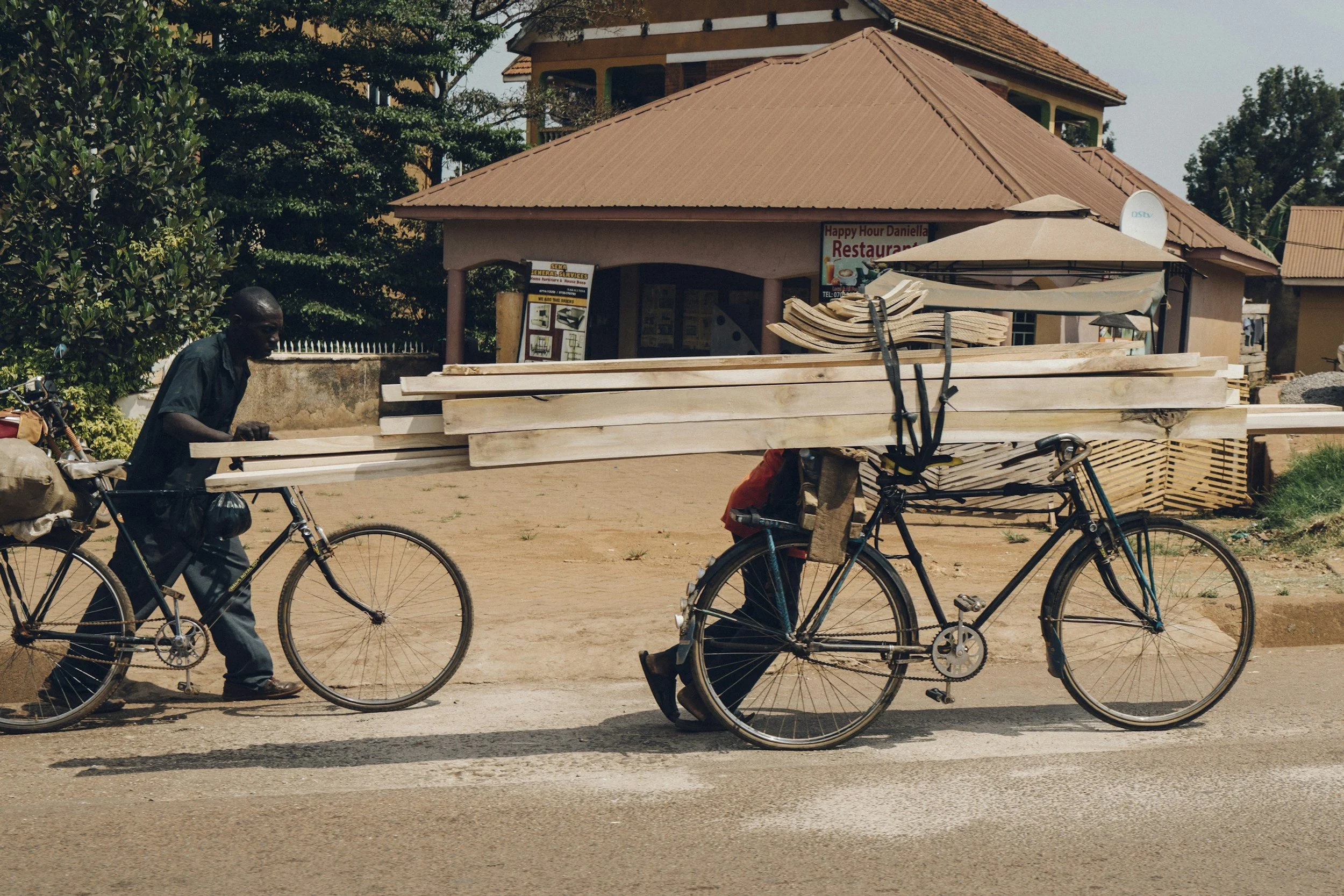
Across the globe, millions rely on bicycles for transportation to access healthcare, education, and work, often across long distances and rugged terrain. For organizations like World Bicycle Relief, reliability is critical: a single mechanical failure can disrupt livelihoods or prevent access to essential services.
Despite the Buffalo Bicycle’s reputation for durability, its design lacked quantitative performance data, making it difficult to systematically identify failure points or guide improvements. To address this, my team developed a low-cost, durable data collection system to capture real-world performance, enabling data-driven design decisions to improve reliability for underserved communities.
Highlights:
Intuitive Design & Installation
Uses Widely Accessible Electronics
Costs less than $100
Partners: World Bicycle Relief, Global Action Impact Association
Role: Vice President
Timeline: Sept. 2024 - May 2025
The Challenge
World Bicycle Relief’s Buffalo Bicycle lacked quantitative performance data, making it difficult to pinpoint failure points or guide meaningful improvements, especially in the rugged conditions where reliability matters most.
To address this, we developed a simple, low-cost data acquisition system built from widely accessible components, designed to capture key performance metrics without adding complexity or compromising durability. This approach ensured the system could be easily deployed, maintained, and scaled, while providing the foundation for data-driven redesigns.
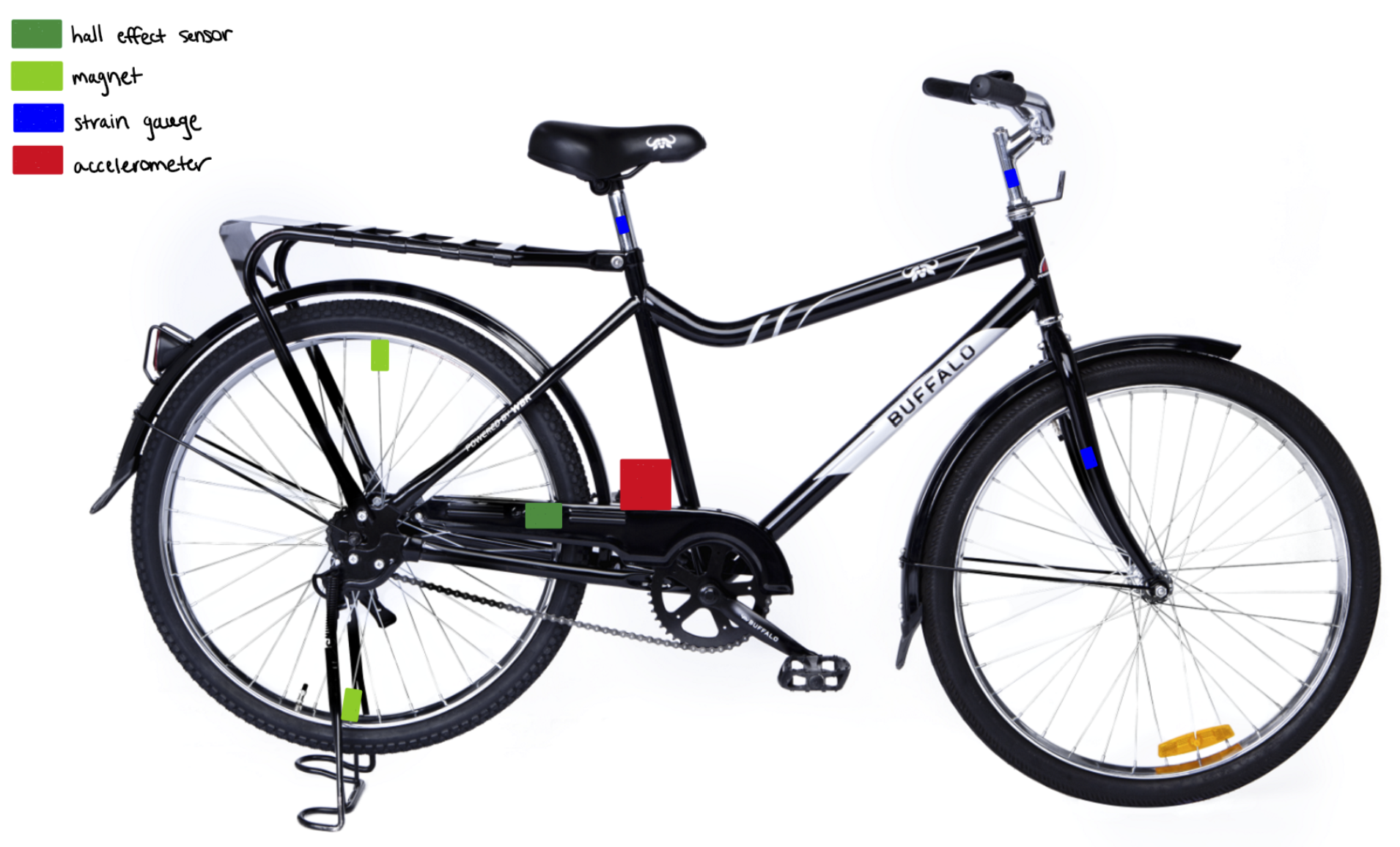
Selected sensors and their locations on the bike.
A Hall-effect sensor and magnets measure wheel rotation to track speed and distance, while an accelerometer records terrain-induced vibration and ride dynamics. Strain gauges mounted on key frame locations measure structural loading by detecting small deformations, with an operational amplifier boosting these signals into a readable range.
All sensors are connected to an Arduino-based system, which timestamps and synchronizes the data streams, ensuring consistent, unified data collection across all measurements.
Together, this compact sensor suite captures speed, vibration, and frame stress, providing a comprehensive view of bicycle performance in the field.
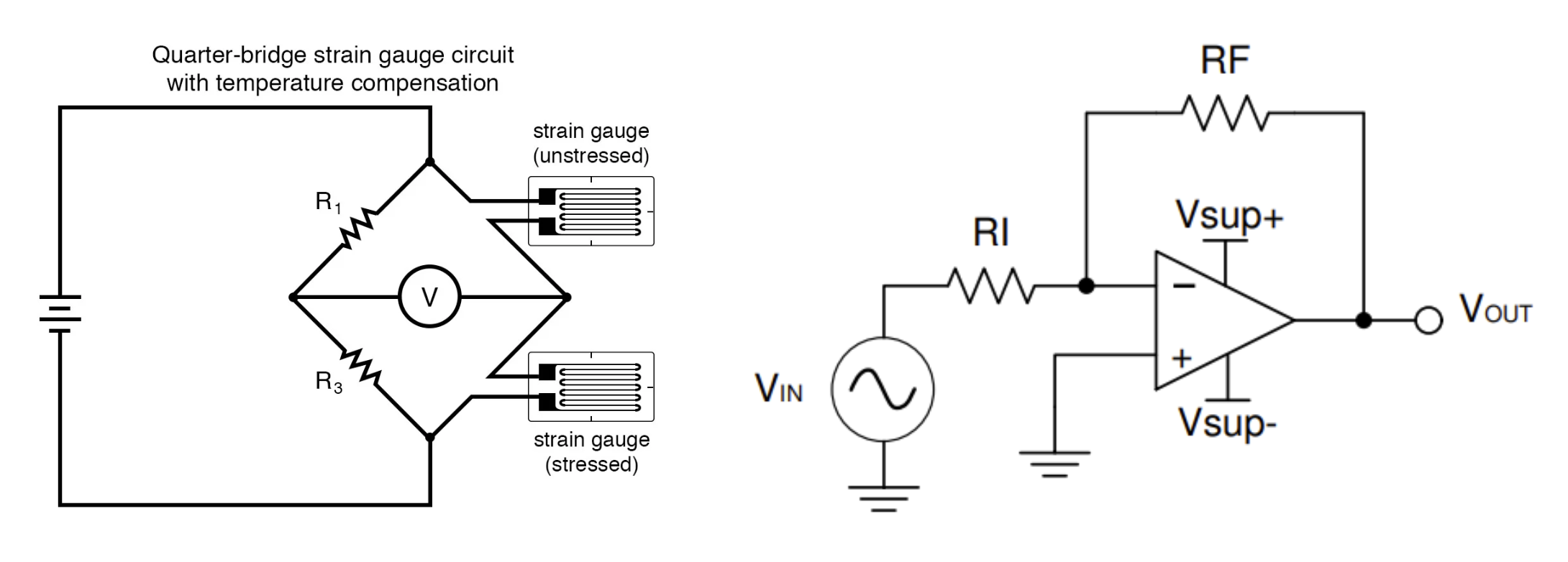
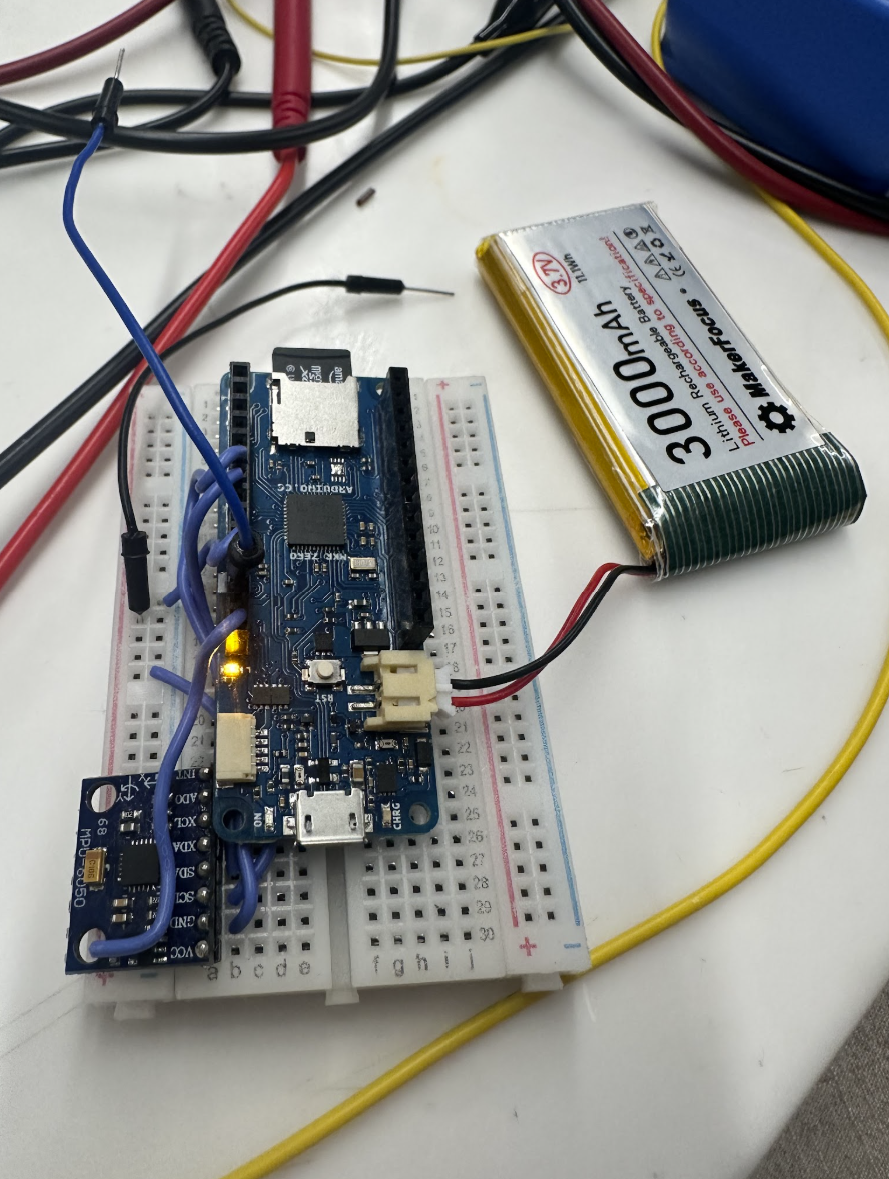
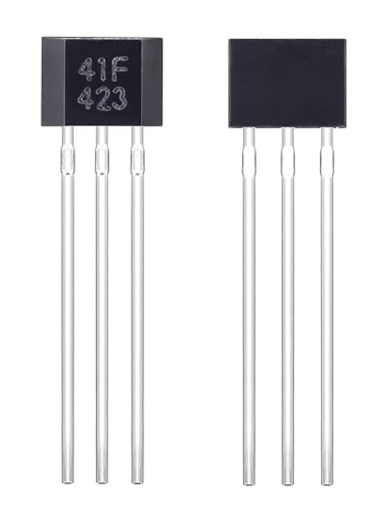
The frame strain gauges (1) are setup using an amplified Wheatstone bridge circuit. Outputs from the strain gauges, hall effect sensors (2), and accelerometers are synchronized on the Arduino (3), which is then placed on the bike.
The Solution
Data from all sensors was collected and synchronized through the Arduino, which continuously sampled each input and stored time-stamped measurements to an onboard SD card. This ensured consistent, unified datasets capturing speed, vibration, and frame stress throughout each ride.
After collection, the data was processed to convert raw sensor signals into meaningful metrics. Wheel rotation counts were translated into speed and distance, accelerometer data was analyzed to characterize terrain-induced vibration, and strain gauge signals were converted into estimates of frame loading. Basic filtering was applied to reduce noise and improve signal clarity.
This pipeline transformed raw sensor output into interpretable performance data, enabling direct comparison across different riding conditions and providing actionable insight for future design improvements.
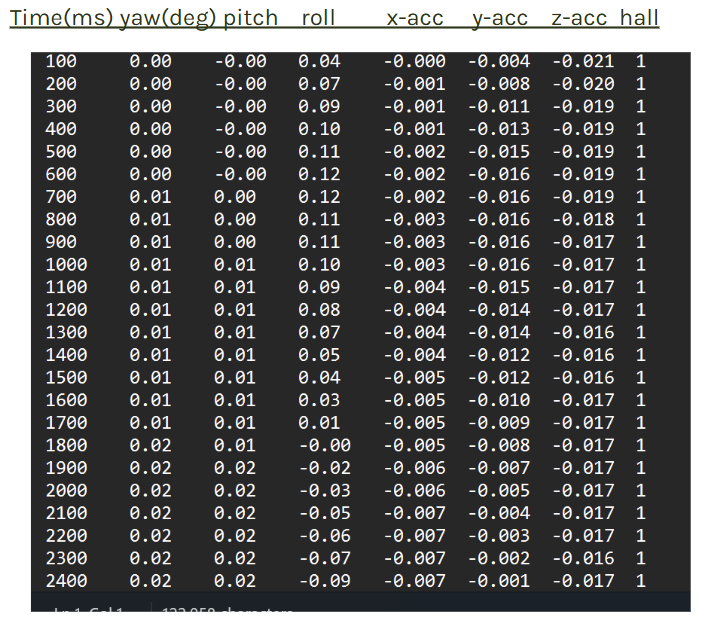
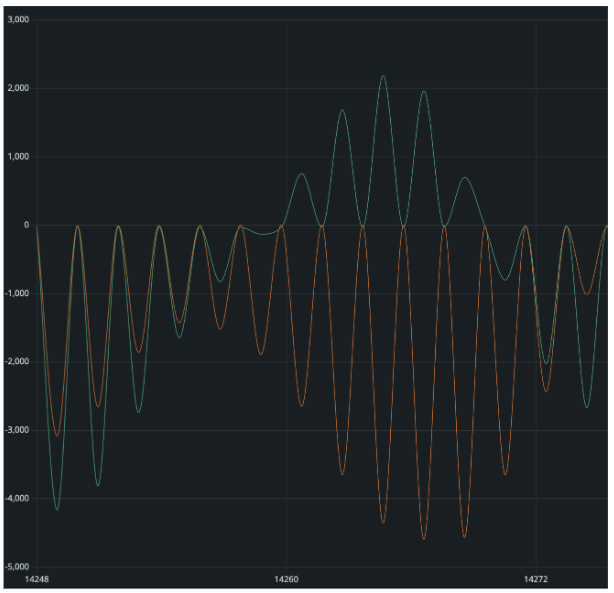
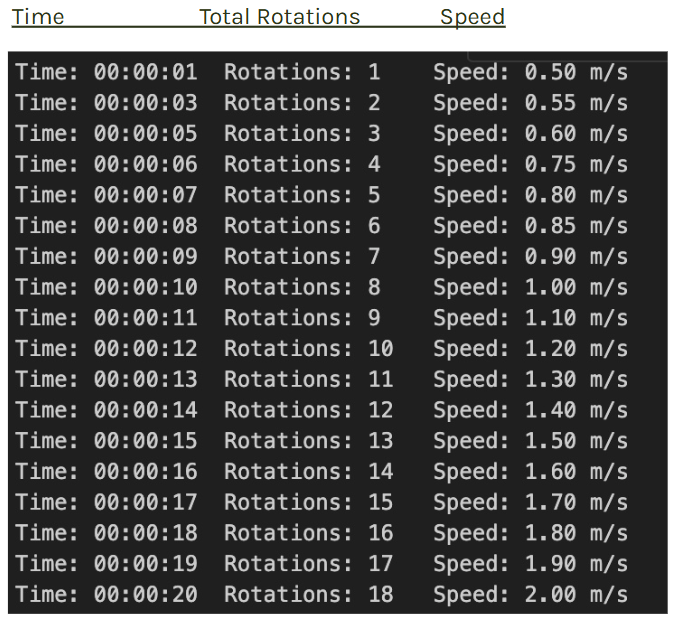
Data from all sensors was collected simultaneously to assess performance. Raw data was filtered, then converted into quantifiable units.
By transforming raw sensor signals into actionable performance data, this system enables World Bicycle Relief to move from anecdotal feedback to data-driven design, identifying failure points and improving long-term reliability for riders in demanding environments.
Building on this foundation, future work will expand field testing across diverse conditions, refine sensor placement and durability, and enhance data processing to extract deeper insights. Together, these efforts move toward continuous, real-world performance monitoring to guide bicycle redesigns at scale.
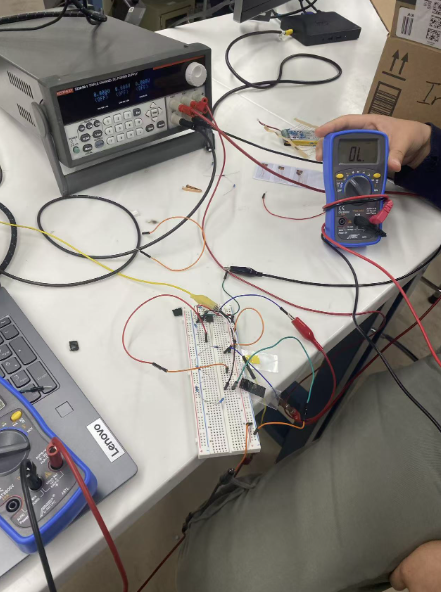
Here we are setting up the circuit on a breadboard before moving it to the bike, a process that must be simplified such that any user may be able to recreate our results.