
Patellar Tendinopathy
Regenerative Stem Cell Therapy
Long-Lasting Tendon Healing
As someone who suffers from tendinitis, I’m acutely aware of how limited current treatments can be. Patellar tendinopathy is a chronic, degenerative condition where care often manages symptoms rather than restoring healthy tendon tissue, leading to long recoveries and reinjury risk. This project explored a proposed regenerative medicine concept focused on rebuilding functional tendon tissue rather than simply treating pain.
My team proposed using mesenchymal stem cells seeded in a biocompatible scaffold and matured in a mechanically conditioned bioreactor. My role centered on background research to ground the concept in clinical literature and unmet needs, and on framing its broader impact as a potential alternative to palliative care and invasive surgery.
The Challenge
The process begins with harvesting adipose tissue, a readily available and minimally invasive cell source. Adipose-derived cells are then processed to isolate mesenchymal stem cells (MSCs), which are multipotent and capable of differentiating into multiple musculoskeletal cell types relevant to tendon repair.
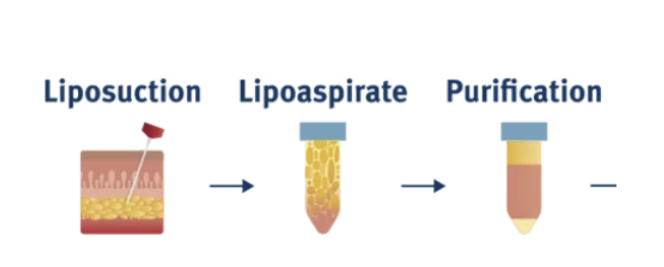
Visualized process in which adipose tissue is extracted and purified to isolate MSCs. Image source: Chemometec
Next, MSCs are differentiated into chondrocytes to support the formation of fibrocartilaginous tissue at the tendon–bone interface, a critical region for mechanical load transfer. This step is essential for restoring the graded structure that healthy tendons require to function under high stress.
The differentiated cells are seeded into a biocompatible hydrogel scaffold and cultured within a mechanically conditioned bioreactor. This environment applies controlled loading to guide tissue organization, promote extracellular matrix deposition, and improve mechanical strength before implantation, better preparing the construct for in vivo stresses.
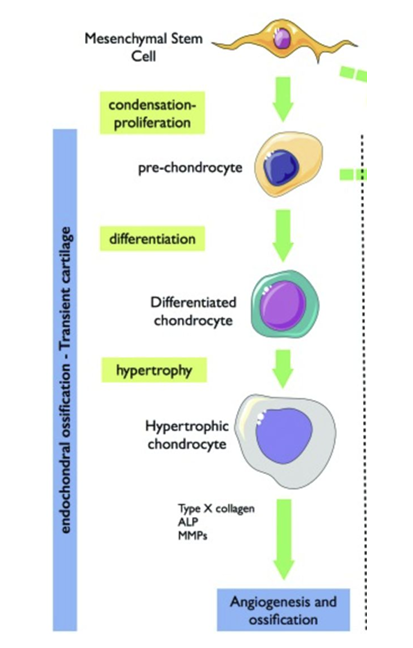
MSC differentiation pipeline. Image from National Library of Medicine.
The Solution
Once matured, the scaffold is surgically implanted at the injury site, where it integrates with native tissue and supports long-term regeneration of the damaged tendon. The scaffold provides both structural support and a biological framework for continued remodeling as the patient heals.
At a broader level, this approach reframes tendon repair as a regenerative process rather than symptomatic management. If translated clinically, it could reduce recovery time, lower reinjury rates, and restore function for athletes and aging populations alike, while establishing a treatment that could extend to other tendon and ligament injuries across orthopedic care.
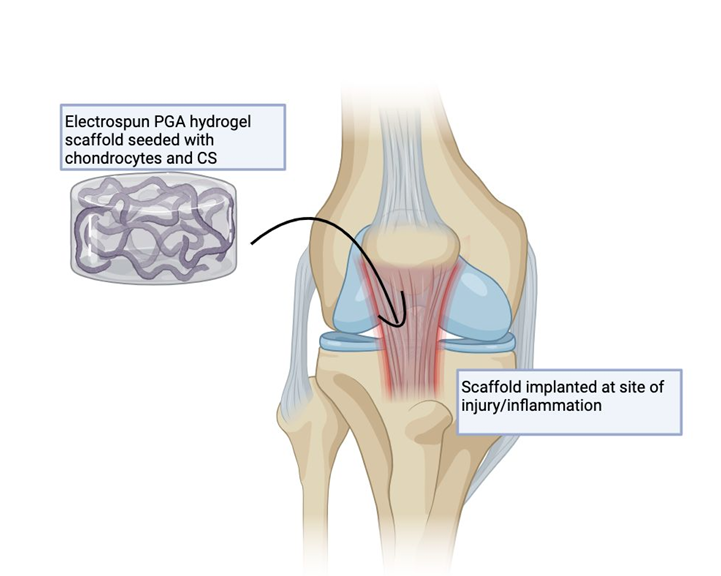
Scaffold is surgically implanted into the site of injury.